
Step-by-Step: Creating Your First Pie
Step 1: Open Trading212 and Navigate to Pies
Log into your Trading212 app or web platform. Look for the “Pies” tab in your main navigation menu. If you’re using the mobile app, you’ll typically find this at the bottom of your screen alongside “Invest,” “Portfolio,” and other main sections.
Step 2: Choose Your Pie Creation Method
Trading212 offers several ways to create a Pie:
- Start from scratch: Build your own custom allocation
- Copy existing Pies: Browse community-created Pies from other investors
Step 3: Set Your Allocations
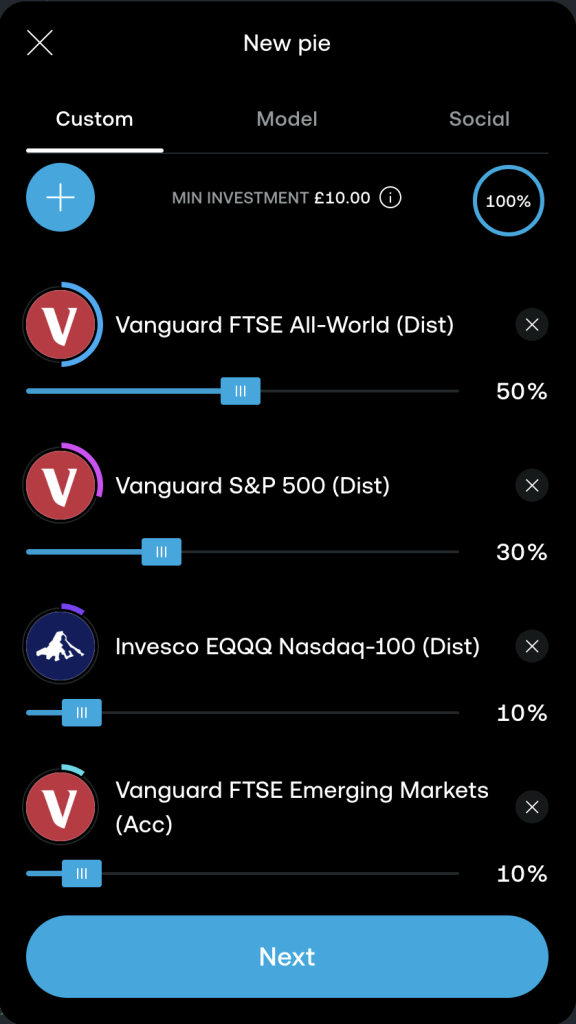
This is where you decide how much of your pie each investment should represent. Your allocations should total 100%. Here’s a sample beginner allocation (for example):
- 50% – VWRL (Global diversification)
- 30% – VUSA (US market focus)
- 10% – EQQQ (Technology growth)
- 10% – VFEG (Emerging markets)
Remember, you can always adjust these percentages later as your investment knowledge grows
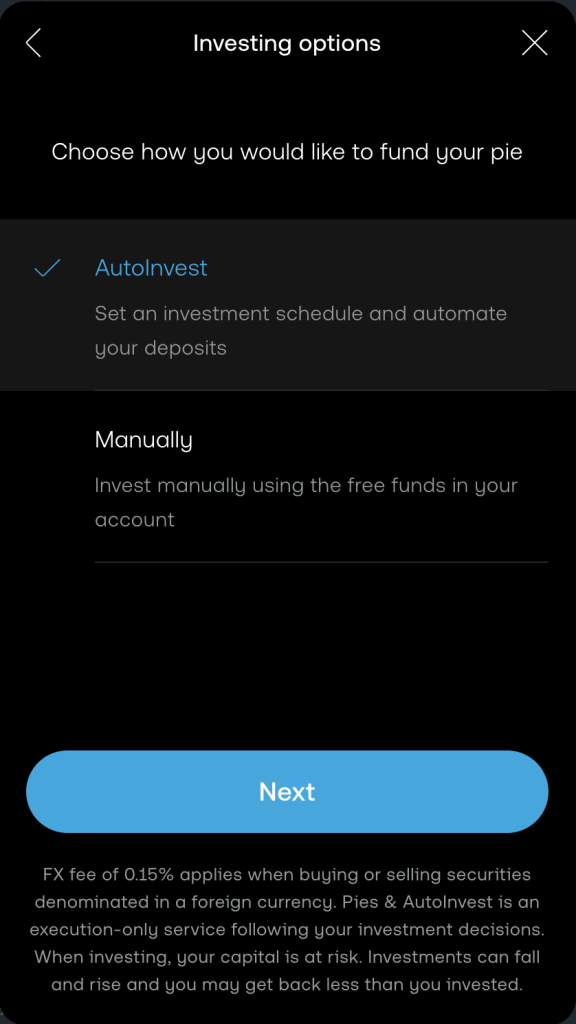
Step 4: Choose your investing options
Autoinvest for automated investments on schedule or Manually for adhoc topups.
Step 5: Choose your initial investment

Step 6: Name and Customize Your Pie
Give your Pie a memorable name like “My First Portfolio” or “Balanced Growth Pie.” You can also add a description to remind yourself of your investment strategy and goals.
Some investors like to include the date they created the Pie or their target timeline in the name for easy reference.

Pro Tips for Pie Success
Start Simple: Your first Pie doesn’t need to be complex. Three to five well-chosen investments can provide excellent diversification.
Regular Contributions: Set up automatic monthly investments to take advantage of dollar-cost averaging and compound growth.
Review Quarterly: Check your Pie’s performance every few months, but resist the urge to make frequent changes based on short-term market movements.
Educational Approach: Use your first Pie as a learning tool. Pay attention to how different investments perform and how they interact with each other.
Risk Management: Never invest money you can’t afford to lose, and ensure your Pie allocation matches your risk tolerance and investment timeline.
Common Beginner Mistakes to Avoid
Over-Diversification: Having too many small slices can dilute your returns and make management complex. Five to eight investments are usually sufficient for most beginners.
Chasing Performance: Avoid constantly adjusting your allocations based on recent performance. Stick to your long-term strategy.
Ignoring Costs: While Trading 212 offers commission-free trading, be aware of any underlying fund fees in ETFs you choose.
Emotional Investing: Market volatility is normal. Don’t panic and sell during market downturns or get overly excited during bull runs.
What Happens After You Create Your Pie?
Once your Pie is active, Trading212 handles the complex work of maintaining your target allocations. When you add new money, it automatically purchases the right amounts of each investment to maintain your desired percentages.
You can monitor your Pie’s performance through detailed analytics, including total returns, individual slice performance, and historical charts. The platform also provides insights into dividend payments and rebalancing activities.
Ready to Get Started?
Creating your first Trading212 pie is genuinely achievable in 5 minutes, but the long-term benefits of consistent, diversified investing can last a lifetime. The key is to start simple, stay consistent, and gradually expand your knowledge as you gain experience.
Remember that all investments carry risk, and past performance doesn’t guarantee future results. Consider your financial situation carefully and don’t hesitate to seek professional advice if you’re unsure about any aspect of your investment strategy.
Your investment journey starts with a single step. Take those 5 minutes today to begin building your financial future.
Disclaimer: This article is for educational purposes only and should not be considered personalized financial advice. Always conduct your own research and consider your individual circumstances before making investment decisions.